olis.bio – Stefania Grappeggia
Postural Yoga with the Olis Method
The Olis Method
The Olis Method is a combination of postural yoga practices and self-treatment techniques that I teach, and it stems from a holistic vision of yoga as a lifestyle. I developed and integrated this approach, which became my method, especially during 2020. Unable to massage my clients directly, who still needed relief, I created self-massage sequences based on my experience as a therapist, blending my knowledge of massage therapy and craniosacral therapy.
My clients found this approach very effective and appreciated it, and from there, I began incorporating it into postural yoga classes for therapeutic purposes.
What is Yoga
The word YOGA derives from the Sanskrit root yuj, which means “to unite” and also represents unity or oneness.In spiritual terms, this union is described as the merging of individual consciousness with universal consciousness.
Yoga is a discipline that engages both the body and mind in a practical sense, aiming to make the mind flexible through physical training, and vice versa.
Its practice allows for tangible benefits regardless of spiritual goals, though lately, we are also reclaiming the spiritual heritage, which is a fundamental and integral part of Yoga.
Additionally, Yoga develops harmony and unity between body and essence, guiding them to look in the same direction.
The practice allows the mind to concentrate and relax, significantly reducing stress and increasing the ability to perceive oneself intimately, with attention and care.
“The stability of the spirit comes from the experience of a luminous and serene state.”
Yoga Sutra
What is Postural Yoga?
Postural Yoga developed as a branch of Hatha Yoga to meet the needs of people with physical back problems who wanted to find a solution to their pain.
Physically, it provides flexibility to the spine, positively affects back pain by providing relief, tones the body, and improves posture. It increases lung capacity through breathing and improves circulation in the tissues.
Although, as we mentioned earlier, its original purpose is not the improvement of health but spiritual realization, the physical well-being that results from the practice of Yoga is such that its therapeutic value is now recognized and documented.
Through consistent practice and perseverance, psychophysical transformation occurs, along with many daily realizations: breathing improves, the body becomes more harmonious and better supports fatigue, the mind is clearer, and it benefits from profound muscular and psychological relaxation.
Postural Yoga can also be defined as yoga therapy because it guides the individual through a self-healing process, promoting awareness of the body and one’s intimacy.
Who is Postural Yoga For
It is designed for those who experience back problems caused by poor posture, a sedentary lifestyle, or a hectic daily routine. It has no particular contraindications and is also suitable for people over 40 who want to stay agile and vital over time.
⚠️ In the presence of diagnosed conditions, herniated discs, inflammation, or pain, it is always advisable to consult your doctor before starting.
Yoga and stress: what happens in your body
The practice of yoga helps reduce the production of cortisol and adrenaline, hormones that induce stress, and promotes a state of calm and deep relaxation. Simultaneously, it stimulates the production of endorphins, substances produced by the brain that enhance good mood, self-control, greater confidence, and energy.
Healing is a natural process that brings the body to a new equilibrium. It requires time and awareness to move in the direction of change; it is a process of self-discovery and empowerment, where the person heals themselves.
Often, tensions and discomforts arise from not listening to the body’s messages because it communicates through a small voice. Sometimes, we become aware of it only when the body makes itself felt significantly to communicate pain, often too late. By training awareness, we can anticipate this moment and act preventively.
Self-Treatment with the Olis Method
For tension and a tight diaphragm
Within the lessons I offer moments of self-massage, to be done alone or with a partner, using basic massage therapy and craniosacral techniques, to release tension and reactivate the body’s resources.
Diaphragm self-massage combined with specific breathing techniques is one of the most effective tools for regaining good breathing capacity.
When the diaphragm is very contracted, due to emotional or physical tension, breath work alone is not enough: it is helpful to stimulate it at a fascial level with a deep, targeted massage.
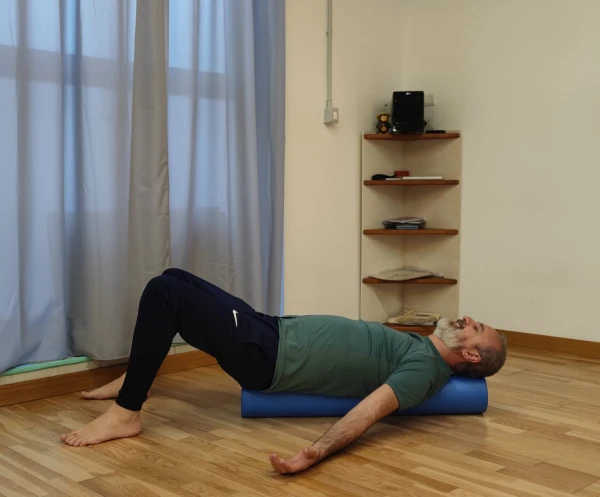
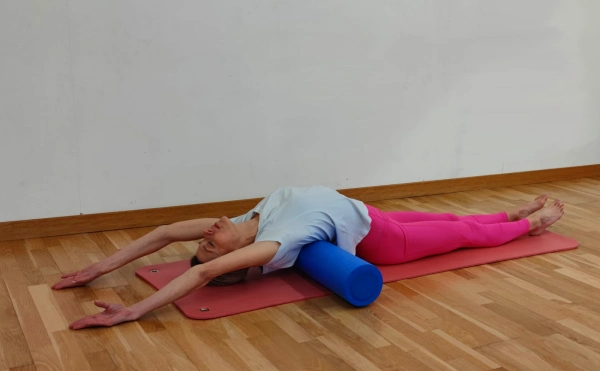
The same applies to the neck and lower back: after stressful days, self-massage with balls and a foam roller before entering the poses provides immediate relief and can become a daily practice to do at home as well..
Reviews
“I’ve been working remotely for over a year and needed to take care of my back. I had already tried following videos with back exercises mainly as a preventive measure, but your course seemed like an attempt to present a comprehensive view of the topic. The main benefits were definitely gaining knowledge of many theoretical aspects related to various topics covered (diaphragm, pelvis, spine, etc.) which also allowed me to understand the importance and scope of the practical exercises proposed. The exercises were simple, repeatable, and effective even at home and alone.”
Marcello
Angelita
I named it the Olis Method because it defines both myself and my work: the whole, the union of mind, body, and spirit. I adopted this practice name in 2004 when I was practicing Hara Yoga with Master Giò Fronti. At first, it was just a name, then it became a direction in my growth, and then it became my lifestyle.